You are here

Blogs

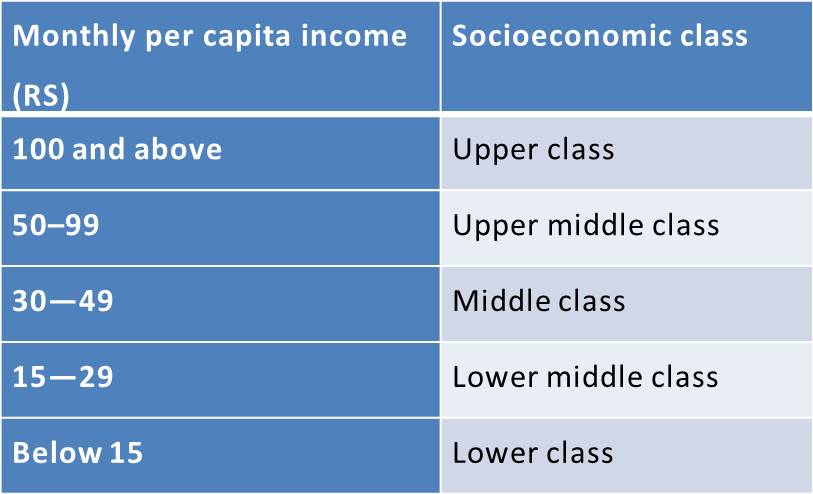
MODIFIED KUPPUSWAMY SCALE

This is the most commonly used scale for determining the SES of an urban family. Kuppus- wamy scale was developed for assessing the SES of an urban individual. It took three parameters into account, namely, education, occupation, and income of the individual
It was modified to enable SES assessment of a family rather than an individual. The parameters were modified as education and occupation of the HOF and the income of. the whole family, pooled from all the sources . These parameters are defined later in this section.

Geriatric Clinico-Social Case in Community Medicine

This blog provides a complete, exam-oriented, and practical guide to Geriatric Clinico-Social Case Taking (CSC) for MBBS and MD Community Medicine students. It explains how to assess an elderly patient under four major components: detailed clinical history and examination, clinico-social diagnosis, effects of illness on the family, and suggested management. The blog highlights common health problems of the elderly, functional decline, chronic diseases, locomotor disorders, psychological issues, and the WHO Age-friendly Primary Health Care (AF-PHC) approach. Students learn how to take a structured history, conduct focused general and systemic examination, fill ADL/IADL scales, identify social support systems, evaluate environmental risks, and plan holistic curative–preventive–promotive management. Essential for CSC practicals, ward exams, and PG assessments.

Brief Mention of the National Policies and Programmes for Elderly (≥60 yr.) in India ( As in 2015)

National Policy for Older Persons (NPOP) 1999 and National Policy on Senior Citizens 2011
• National Programme for Health Care of Elderly (NPHCE), 2011
• Relevant Constitutional Provisions

– The right of parents, without any means, to be supported by their children having sufficient means has been recognized
– Provident funds
– Old age pension
National Old Age Pension (NOAP) Scheme,
• Maintenance and Welfare of Parents and Senior Citizens Act, 2007

Format for Clinico-Social Case Taking in Community Medicine

This blog provides a complete, MBBS-oriented format for Clinico-Social Case (CSC) taking, emphasizing assessment of the index case within the context of family and environment. It outlines all major components—including identification data, clinical history and examination, family health study, housing and environmental assessment, customs and health practices, KAP regarding contraception, and steps for clinico-social diagnosis. The blog also guides students on suggesting curative, preventive, and promotive management at individual, family, and community levels.

Growth Chart Plotting & Dietary Counselling for Under-5 children: Guide for Health Workers

WHY, Dietary Counselling?
• SAM = Severe Acute Malnutrition
• MAM = Moderate Acute Malnutrition
• Under-nourished children (MAM & SAM) have serious consequences
– Increased morbidity and increased risk of infections
– Increased mortality
– impaired physical and
– Impaired cognitive development, compromised IQ even in adulthood
– Develop into stunted adults
– Increased disease even in adulthood
– SAM is potentially life threatening as associated with complications

Mosquito Breeding Areas in Households

Some common places to check for water accumulation are as follows:
Inside the house
• Desert coolers
• Flower vase
• Potted plants
• Water tanges, cisterns, and other stored water
• Old cans, tires, coconut shells, bottles lying in open, etc.
Around the house
• Puddles and roadside ditches
• Open drains
• Cess pools
• Soakage pits
• Old non-functioning fountains, bird baths, ornamental pools, etc.

Pages

Subscribe to RSS - blogs