You are here

Blogs

National Clean Air Programme (NCAP) – An Overview

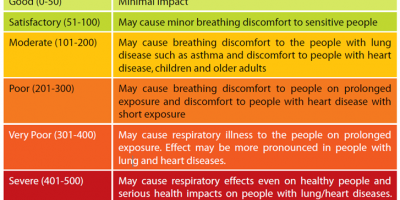
The National Clean Air Programme (NCAP), launched in 2019 by the Government of India, is a nationwide strategy to reduce air pollution and improve air quality across the country. It aims for a 20–30% reduction in PM10 and PM2.5 levels by 2024, using 2017 as the baseline. The programme focuses on strict mitigation measures, expansion of the national air quality monitoring network, and large-scale public awareness and capacity-building initiatives. NCAP emphasizes inter-sectoral coordination across ministries, integration with the National Action Plan on Climate Change (NAPCC), and adoption of scientific and technological advancements. Implemented by the Central Pollution Control Board, NCAP aims to create long-term, sustainable improvements in environmental and public health.

Programs for strengthening Health Infrastructure and services

India has launched several major national programs to strengthen healthcare infrastructure, improve service quality, and move toward Universal Health Coverage (UHC). Key initiatives include the National Health Mission (NHM) for strengthening primary and secondary care systems; Ayushman Bharat, which provides insurance coverage through PM-JAY and upgrades health facilities into Health & Wellness Centres; Pradhan Mantri Swasthya Suraksha Yojana (PMSSY) for expanding tertiary care and creating new AIIMS; the LaQshya Programme aimed at improving labour room and maternity care quality; and the National Digital Health Mission (NDHM), which is transforming healthcare through digital health records and integrated digital services. Together, these programs enhance accessibility, affordability, and quality of healthcare across India.

Non – Communicable Disease control Programs

• National Program for Prevention and Control of Non-Communicable Diseases (NP-NCD)
• National Tobacco Control Program (NTCP)
• National Mental Health Program (NMHP)
• National Progam for Control of Blindness and Visual Impaiement (NPCB & VI)
• National Program for Control of Deafness (NPCD)
• Pradhan Mantri National Dialysis Program (PMNDP)
• National Program for Prevention and Control of Fluorosis (NPPCF)
• National Program for Healthcare of Elderly (NPHCE)
• National Oral Health Program (NOHP)

Communicable Disease control Programs

• National Vector Borne Diseases Control Program (NVDCP)
• Natioal Leprosy Eradication Programme (NLEP)
• National TB Elimination Program (NTEP)
• National AIDS Control Program (NACP)
• National Viral Hepatitis Control Program (NVHCP)
• National Rabies Control Program
• Guinea Worm Eradication Programme (GWEP)
• Antimicrobial Resistance (AMR) Containment
• Yaws Eradication Programme (YEP)
• Programe for Prevention and Control of leptospirosis
• National Program for Containment of Anti-microbial Resistance (AMR)

National Nutrition Programs

• National Iodine Deficiency Disease Control Program (NIDDCP)
• Mother’s Absolute Affection (MAA) Program for Infant and Young Child Feeding
• National Program for Prevention and Control of Fluorosis
• National Iron Plus Initiative
• National Vitamin A Prophylaxis Program
• Integrated Child Development Services (ICDS) – MoWCD (Min. of Women & Child Dev.)
• Mid-Day Meal Program – Min. of Education
• National Nutrition Mission – MoWCD (Min. of Women & Child Dev.)
• Poshan Abhiyan– MoWCD (Min. of Women & Child Dev.)

Reproductive, Maternal, Neonatal, Child and Adolescent Health Programs

• Maternal Health
o Janani Shishu Suraksha Karyakaram (JSSK)
o Janani Suraksha Yojna
o Pradhan Mantri Surakshit Matratav Abhiyan
o LaQshya Program (Labor Room Quality Improvement Initiative)

• Neonatal Health
o Navjat Shishu Suraksha Karyakaram

Adolescent Health
o Rashtriya Kishore Swasthya Karyakaram (RKSK)

Child health
o Rashtriya Bal Swasthya Karyakaram (RBSK)
o Ayushman Bharat School Health & Wellness Programme

Confidence Interval – A Beginner’s Guide

If we want to measure a parameter of a population e.g. heights of the men in a city having 1,70,000 men:
One way can be that we measure the heights of ALL the 1, 70,000 men and calculate the mean.
This way we are sure we know the true mean of the population’s height (Population mean).
This may be a mammoth exercise and one may be hesitant in doing this.
So, mostly one chooses a sample from the study population, measures the heights of the participants and calculates the mean height of the sample.

विटामिन A की कमी से बिटोट स्पॉट का गठन क्यों होता है?

विटामिन ए की कमी से आंख की नमी एवं चिकनाई कम हो जाती है
इस से कंजाक्तिवा की कोशिकाएं शुष्क हो जाती हैं।
यह शुष्क और केरटिन्युक्त कोशिकाएं आँख में झड़ जाती हैं। यह अब एक मलबा होता है।
प्रत्येक पलक झपकने के साथ, यह मलबा आंख के केंद्र की ओर स्वाइप होता है।
Epithelial debris moves to the center with each blink

Pages

Subscribe to RSS - blogs