
Water-seal latrine
What is a Water Seal? How Water-Seal Latrines Work, Benefits & Sanitation Importance
What is a Water Seal?
- A ‘water seal’ is a simple but smart mechanism built into toilets and latrines.
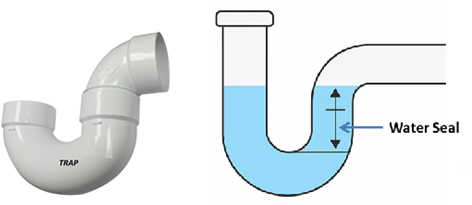
- It’s usually a curved pipe, called a ‘trap’ - located just below the squatting plate or toilet bowl.
- This trap always holds a small amount of water due to its design.
If you've ever used a toilet, even in a rural area and noticed that it doesn't smell: you’ve one clever little feature to thank: i.e. the “water seal”.
How Does a Water Seal Work?
Let’s dive in (well, not literally!).
- It might not look like much, but that little bit of water is doing some serious job.
- The water sitting in the curved 'trap' forms a ‘barrier’ between the user and the waste collection pit or sewer below.
So, How Does It Actually Work? The Simple Genius behind Odor-Free Toilets
Here’s what it does:
1. Keeps Flies Out
- Flies love to hang around waste. But with a water seal in place, they can’t enter the pit to lay eggs or fly up from the pit.
- This helps reduce the spread of diseases like diarrhea and dysentery.
2. Blocks Bad Smells
Ever opened a pit latrine and instantly regretted it?
- A water seal prevents foul-smelling gases from escaping. Since gases can’t pass through water easily, the seal traps them inside the pit — out of your nose’s reach.
3. Improves Hygiene and Privacy
- Once the toilet is flushed, the waste disappears — hidden from sight and smell.
- This makes using the toilet a much more pleasant and dignified experience, especially important in community settings.
Where Do You Find Water Seals?
Water seals aren’t just for fancy urban toilets.
Water-seals are also used in rural latrines, like ‘pit (dug-well) latrine, RCA and PRAI types latrines
- These hand-flushed toilets use just a small amount of water, but
- Provide massive improvements in sanitation
The Simple Science behind It!
- Water has weight and density — which means it resists the movement of gases trying to rise through it.
- When the pipe is bent into a U or S shape, water naturally stays inside after each flush.
- It’s this water that forms the effective seal.
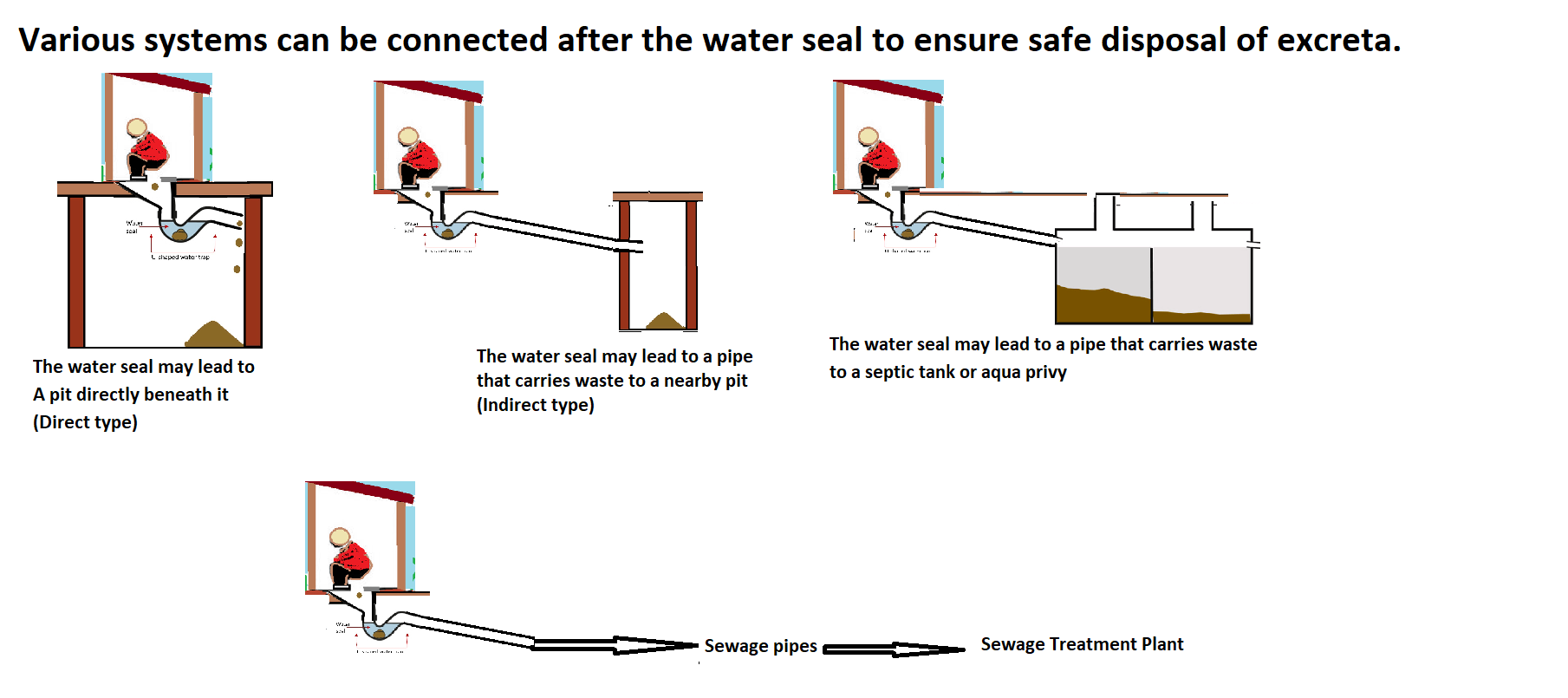
Various systems can be connected after the water seal to ensure safe and hygienic disposal of excreta. The water seal may lead to:
- A pit directly beneath it (Direct type)
- A pipe that carries waste to a nearby pit (Indirect type)
- A septic tank or aqua privy
- A sewer pipe connected to a municipal or community sewage system
The design is low-cost, low-maintenance, and highly effective. No electricity, no fancy materials — just ‘gravity + water + smart engineering’.
Why It Matters
- In places where basic pit latrines are common, adding water-seal can be a major improvement.
- Water-seal is simple, easy to use, and is more likely to make people will want to use a toilet
Tried, Tested, and Trusted Designs
Over time, many versions of the water-seal latrine have been tested. But two designs have proven to work best in the field:
- P.R.A.I. type: Developed by the Planning, Research and Action Institute in Lucknow.
- RCA type: Created by the Research-cum-Action Projects under the Ministry of Health, Government of India.
Of the two, the RCA latrine has become the preferred choice for wide-scale adoption across the country.
References:
- Park's Textbook of Preventive and Social Medicine. 26th ed. Jabalpur: M/S Banarsidas Bhanot; 2021. Environment and Health; p. 799-883.
- Park's Textbook of Preventive and Social Medicine. 27th ed. Jabalpur: M/S Banarsidas Bhanot; 2023. Environment and Health; p. 832-915.
- Bhalwar R. Textbook of Community Medicine. 5th ed. New Delhi: Wolters Kluwer; 2023. Chapter 8, Excreta Disposal; p. 89-101.
Sanitation Barrier: Sanitation Barrier: Keeping Our Communities Healthy
Excreta Disposal: Proper Excreta Disposal: A Necessity for Health and Dignity
Bore-Hole Latrine
The Dug Well Latrine (Pit Latrine): The Dug Well Latrine (Pit Latrine): A More Practical Alternative to the Borehole Latrine
Borehole vs. Dug-Well Latrines: A Comparison
Water-seal Latrine: Water-seal latrine
RCA Latrine
Septic Tank: How it Works: Septic Tanks: How do these work?
Aqua Privy: Aqua privy: How does it work?