RCA Latrine
What Makes Up an RCA Latrine?
Whether it's the PRAI or RCA type, both have the same essential parts — only the technical details differ slightly. You’ll typically see:
- A squatting plate
- A pan for excreta reception
- A trap for maintaining water-seal
- A system positioned after the water seal, for safe and hygienic excreta disposal
- Connecting pipe
- The Pit (Dug-well)
- A super-structure
RCA Latrines: Designed by the Research-cum-Action (RCA) Projects (MoHFW, GOI)
The RCA (Research-cum-Action Projects) latrine is a simple yet effective sanitation solution, especially in rural and semi-urban areas, practical and hygienic.
The essential features of an RCA latrine are described below:
1. Location: Where you build a latrine is just as important as how it’s built
To avoid contaminating water sources, an RCA latrine should be located
- At least 15 meters (50 feet) away from wells or water source
- At a lower elevation. Why? This helps prevent bacteria from seeping into water source.
- Away from flood-prone zones:
o Flood water may spread human waste into the environment, rivers and lakes
o Flood water may damage/collapse latrine structure
o Floods renders the latrine unusable
2. The Squatting Plate: Designed for Comfort & Cleanliness
The squatting plate in an RCA latrine is made of concrete so that it is:
- Impervious (water-resistant): Easier to keep dry, preventing hookworm larvae survival.
- Easy to clean
- Tailored to Indian habits, like ‘squatting’ and using water for anal cleansing.
The standard version is a
- square slab
- 90 cm x 90 cm (3 ft)
- 5 cm (2 in) thick at the outer edge
- A gentle slope toward the pan: ensures used water flow right where it should—no puddles, no problems.
o For variety, a circular slab of the same diameter (90 cm) also does the trick.
- And yes, it includes raised footrests for added comfort and stability while squatting.
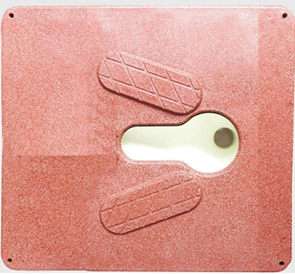
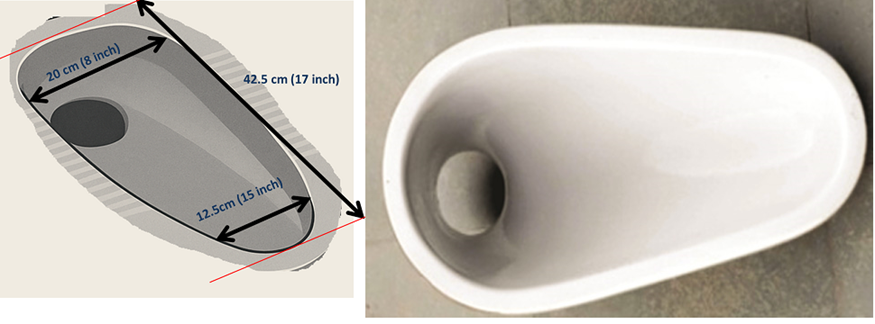
3. The Pan: for receiving waste and wash water. It’s:
- Length: 42.5 cm (17 in),
- Width:
o 12.5 cm (5 in) in the front portion
o 20 cm (8 in) in the widest portion
- Smoothly sloped from front to back for swift drainage
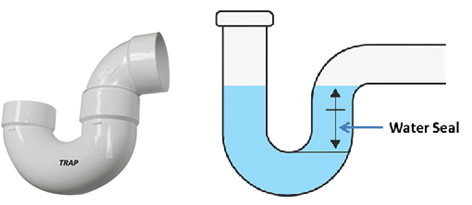
4. The Trap: Blocking Smell & Stopping Flies
It’s the hero of RCA latrine—the trap is a bent pipe having 7.5 cm (3 in) in diameter
- Connected to the pan and holds a small amount of water—forming a "water seal".
o In the RCA model, the water seal is 2 cm (¾ in) deep.
- This barrier blocks odor and stops flies from coming back up.
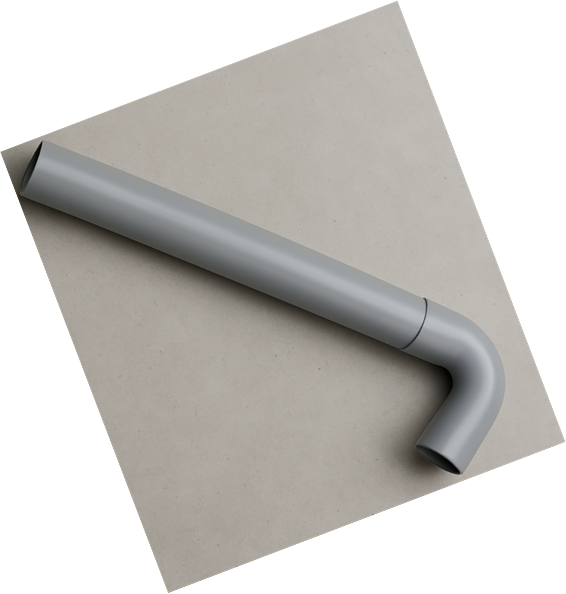
5. The Connecting Pipe: Keeping Things Flowing
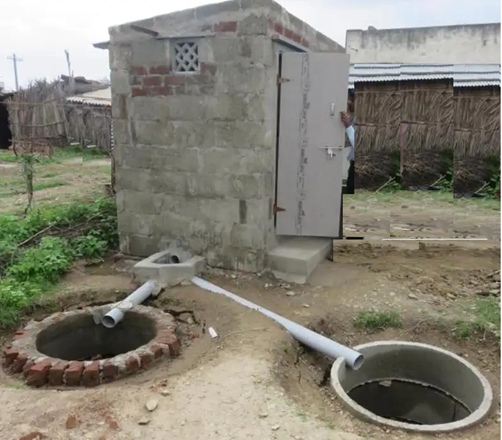
In the indirect-type RCA latrines (where the pit isn’t directly under the squatting plate), a connecting pipe bridges the trap to the pit.
- Diameter: 7.5 cm (3 inch)
- Length: More than 1-meter (3 ft.)
- It’s bent at the end to keep everything flowing smoothly.
Why choose the indirect type RCA latrine?
- When one pit fills up, you can easily switch to another by just redirecting the pipe. It’s that flexible.
Whereas, the direct-type water-seal latrines (no connecting pipe) are
- cheaper and more compact,
- needing lesser space
However, suitable only for areas with stable, hard soil
6. The Pit: The Final Destination
The pit—also called a ‘dug well’—is where the waste is stored and decomposed anaerobically.
- It’s typically:
- 75 cm (30 in) in diameter,
- 3 to 3.5 meters (10–12 ft) deep,
- Covered to prevent accidents and reduce smells.
- In loose or waterlogged soil, reinforcements like earthenware rings or bamboo matting are needed to keep the pit intact.
- When the first pit fills up, dig a second one nearby and reroute the connecting pipe.
- You can even reuse the first pit later.
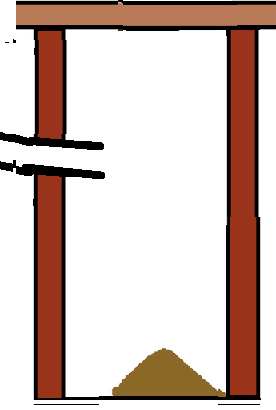
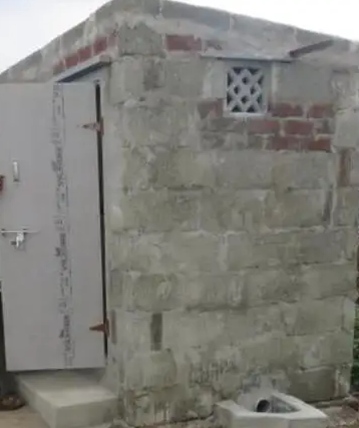
7. The Superstructure: Provides privacy & dignity
A neat, well-built superstructure makes a world of difference.
8. Maintenance: The Key to Longevity
Even the best-designed latrine won’t last if it’s not well maintained. Here’s what helps:
- No dumping trash, it’s not a garbage bin.
- Keep it dry and clean—especially the squatting plate.
- Flush it with 1–2 liters of water after each use.
- More importantly, health education: ensures people understand how to use and maintain these latrines properly.
o After all, clean habits = healthier communities
Direct vs. Indirect: Which One’s Better?

Winner: Indirect-type—because when one pit fills, just switch to another.
- Once full, dig a new pit nearby and redirect the pipe.
- The old waste decomposes and can even be reused safely later!
References:
- Park's Textbook of Preventive and Social Medicine. 26th ed. Jabalpur: M/S Banarsidas Bhanot; 2021. Environment and Health; p. 799-883.
- Park's Textbook of Preventive and Social Medicine. 27th ed. Jabalpur: M/S Banarsidas Bhanot; 2023. Environment and Health; p. 832-915.
- Bhalwar R. Textbook of Community Medicine. 5th ed. New Delhi: Wolters Kluwer; 2023. Chapter 8, Excreta Disposal; p. 89-101.
- United Nations High Commissioner for Refugees (UNHCR). Emergency Water and Sanitation: Training Materials – Excreta Disposal. Geneva: UNHCR; 1992. Available from: https://www.unhcr.org/in/sites/en-in/files/legacy-pdf/49db13ad2.pdf accessed on 11th April 2025 at 1 pm.
Sanitation Barrier: Sanitation Barrier: Keeping Our Communities Healthy
Excreta Disposal: Proper Excreta Disposal: A Necessity for Health and Dignity
Bore-Hole Latrine
The Dug Well Latrine (Pit Latrine): The Dug Well Latrine (Pit Latrine): A More Practical Alternative to the Borehole Latrine
Borehole vs. Dug-Well Latrines: A Comparison
Water-seal Latrine: Water-seal latrine
RCA Latrine
Septic Tank: How it Works: Septic Tanks: How do these work?
Aqua Privy: Aqua privy: How does it work?