
Asbestosis
Environment and HealthOccupational Health
Asbestosis
- Asbestos consists of certain types of fibrous material made up of silicates
- Silica may be combined with:
- Magnesium
- Iron
- Calcium
- Aluminum
- Asbestos is of two types:
- Serpentine or Chrysolite –
- Hydrated magnesium
- 90% of world’s asbestos production
- Amphibole
- Contains little magnesium
- Fibers are straight and longer than chrysotile fibers
- Asbestos is used in the manufacture of:
- Asbestos cement
- Fire proof textiles
- Roof tiling
- Brake lining
- Gaskets etc.
- Asbestos enters the body by inhalation and fine dust may be deposited in the alveoli
- The fibers are insoluble
- The dust deposited in the lungs causes pulmonary fibrosis leading to:
- Respiratory insufficiency and death
- Carcinoma of bronchus
- Mesothelioma of the pleura or peritoneum (otherwise a rare form of cancer) and
- Cancer of the gastro intestinal tract
- The risk of bronchial cancer is reported to be high if occupational exposure is combined with cigarette smoking
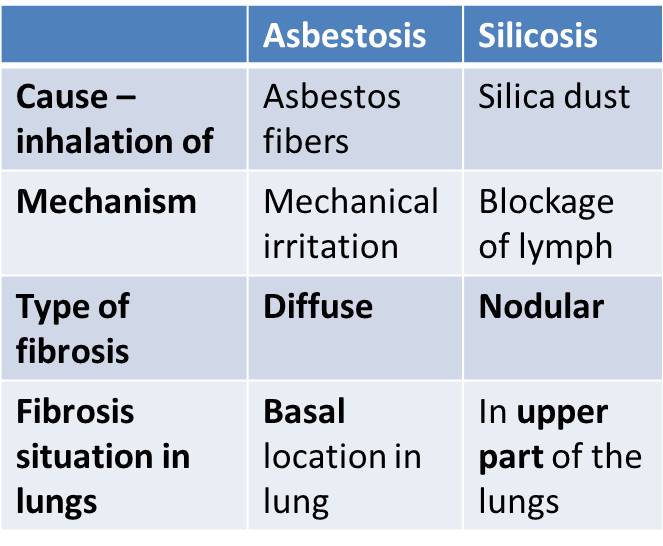
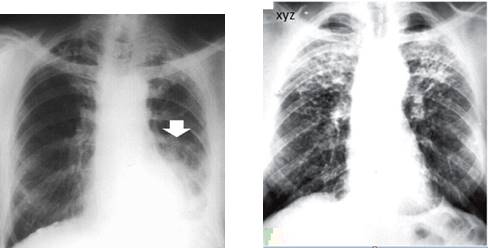
- The fibrosis is
- Due to mechanical irritation
- Is peri-bronchial,
- Diffuse in character and
- Basal in location - This is in contrast to silicosis
References
- Chapter 1 - Dust: Definitions and Concepts; Hazard Prevention and Control in the Work Environment: Airborne Dust WHO/SDE/OEH/99.14 available at: http://www.who.int/occupational_health/publications/en/oehairbornedust3.pdf, accessed on 16th Feb 2017
- Park’s Textbook of Preventive and Social Medicine
Types of Pneumoconiosis: Pneumoconioses
Silicosis: Silicosis
Anthracosis: Anthracosis
Byssinosis: Byssinosis
Bagassosis: Bagassosis
Asbestosis: Asbestosis
Farmer’s Lung: Farmer’s Lung
Lecture on Pneumoconiosis: Occupational Health