Why do Bitot’s Spots form in Vitamin A deficiency?
Vitamin A deficiency reduces mucus lubrication of the eye
- Which leads to drying of the conjunctiva and keratinization of its epithelial cells
These dry and keratinized cells are desquamated into the conjuctival sac as debris
With each blink, the eyelids swipes the debris toward the center of the eye
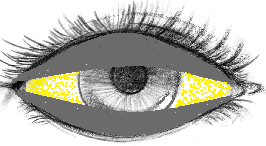
Corynebacterium xerosis is a commensal bacteria found in the skin and mucous membranes of humans.
- These bacteria release gas as a part of their metabolism.
These bacteria get mixed with the cell debris
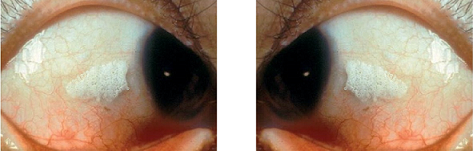
With repeated blinking, the debris containing keratinized cells and gas forming bacteria accumulate on the sides of the cornea (at 3° and 9 ° clock position)
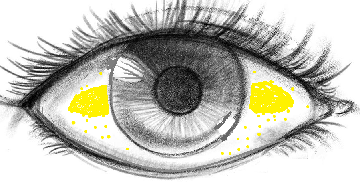
- More often seen on the lateral side of the cornea i.e. the 9 ° clock position
The gases released by the bacteria cause the foamy appearance of the debris accumulated on the sides of the cornea
References:
- Gilbert C. The eye signs of vitamin A deficiency. Community Eye Health. 2013;26(84):66-7. PMID: 24782581; PMCID: PMC3936686.
- https://eyewiki.aao.org/Xerophthalmia
Same blog in HINDI (विटामिन A की कमी से बिटोट स्पॉट का गठन क्यों होता है?
):विटामिन A की कमी से बिटोट स्पॉट का गठन क्यों होता है?
Why do Bitot’s Spots form in Vitamin A deficiency?