Post – Exposure Prophylaxis for Rabies
The aim of post–exposure prophylaxis is to neutralize the inoculated virus BEFORE it can enter the nervous system
- Every instance of human exposure should be treated as a medical emergency
- The components of prophylactic treatment are:
- Local treatment of wound
- Antibiotics and anti-tetanus measures
- Active immunization against rabies – if indicated
- Passive immunization with rabies immunoglobulin – if indicated
- Observe the animal for 10 days from the day of bite:
- If healthy after 10 days: Discontinue post – exposure vaccination
- If dies within observation period: complete PEP
- If observation not possible: complete the post – exposure vaccination
Local Treatment of the Wound
- Prompt and adequate local treatment of all bite wounds and scratches is the first requisite
- The purpose of local treatment is to remove as much virus as possible from the site of inoculation before it can be absorbed on nerve endings
- Local treatment is of maximal value when applied immediately after exposure
- If possible, within minutes
- But it should not be neglected if several hours or days have elapsed
- Animal experiments have shown that local wound treatment can reduce the chances of developing rabies by up to 80%
Cleansing:
- Immediate flushing and washing the wound/s, scratches and the adjoining area
- With PLENTY of soap and running water (preferably under a running tap)
- If soap is not available, at least simple flushing of the wounds with plenty of water should be done as first aid
- In case of punctured wounds, catheters should be used to irrigate the wounds
Chemical treatment:
5. The residual virus after cleansing, should be inactivated by irrigation with virucidal agents
- Alcohol 400 – 700 ml/L or
- Iodine solution (tincture/ 0.01% aqueous solution/ povidone Iodine)
Avoid Suturing:
Bite wounds should NOT be immediately sutured
This is to prevent additional trauma as it may help spread the virus into deeper tissues
If necessary, it should be done 24 – 48 hr. later:
Applying minimum possible stitches
Under the cover of rabies immunoglobulin, LOCALLY
Local treatment is to be followed by:
- Antibiotic administration
- Tetanus toxoid if indicated
2. Immunization with rabies vaccine and immunoglobulin as per the table below
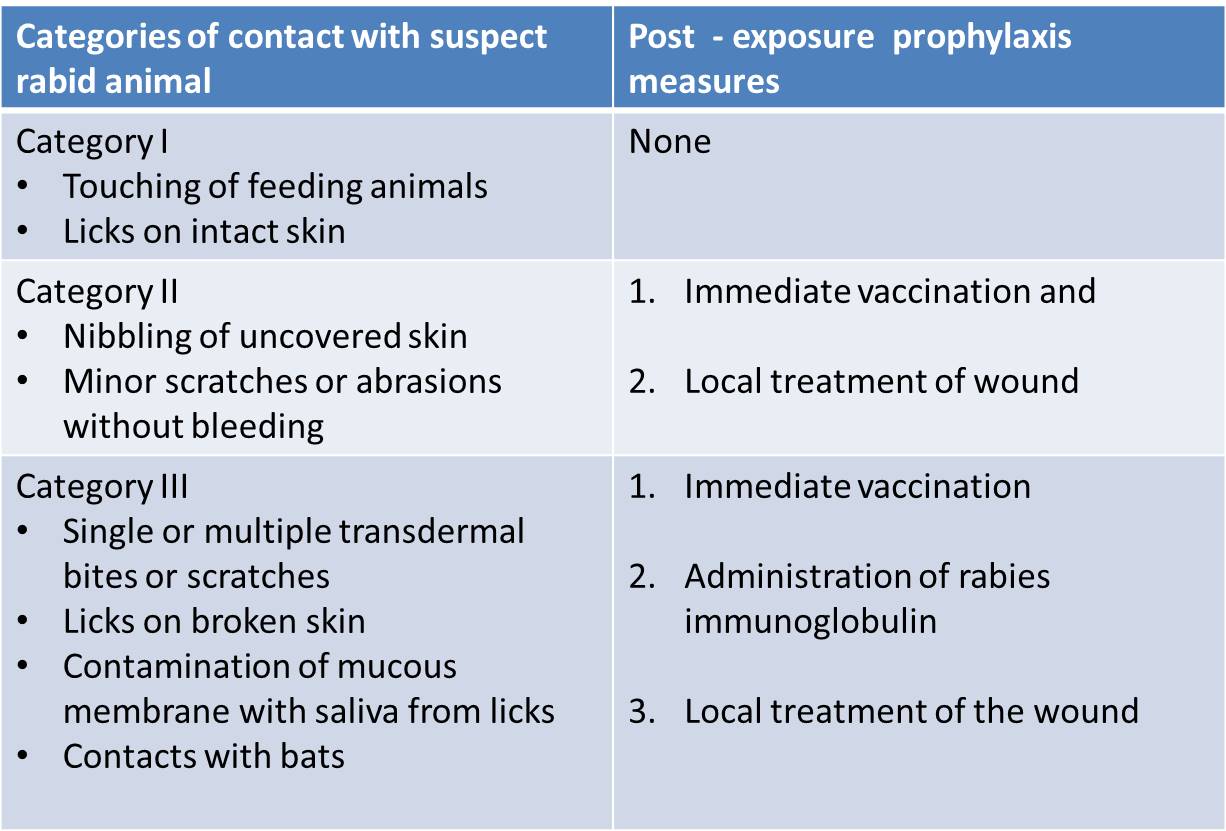
- Category II and III exposures carry a risk of developing rabies and require PEP
- This risk is higher if:
- The biting mammal is a known rabies reservoir or vector species
- The animal looks sick or has abnormal behavior
- A wound or mucous membrane was contaminated by the animal’s saliva
- The bite was unprovoked
- The animal has not been vaccinated and
- If the biting animal cannot be traced or identified
The vaccination status of the suspected animal alone should not be considered for deciding on PEP
- PEP may be discontinued/modified if:
- The suspected animal is confirmed to be free of rabies by laboratory examination or
- In the case of domestic dog/ cat, the animal remains healthy throughout the 10 day observation period starting from the date of the bite
However what is advised in the above scenario is:
- If Intradermal schedule is followed, complete the schedule
- If Intramuscular route is used, convert the schedule to that of the PRE exposure prophylaxis by omitting the day 14 dose.
This will be of help in future bites because;
- Lesser number of doses will be needed
- May eliminate the requirement for Rabies immunoglobulin
Reference:
Government of India, National rabies control programme, National guidelines on rabies prophylaxis, National Centre for Disease Control, 2019, Delhi, India.
Dog Bite: FAQs: Dog – bite; Frequently Asked Questions (India, 2019)
Post Exposure Prophylaxis (PEP) for rabies: Post – Exposure Prophylaxis for Rabies
RABIES VACCINE
signs & symptoms of rabies in brief: Signs and symptoms of rabies in brief
Categorization of animal bite: Post – Exposure Prophylaxis for Rabies
Steps of immediate wound management in animal bite: Steps of immediate wound management
Rabies Vaccination: Rabies Vaccination