Epidemiology of Acute Diarrheal Diseases
Epidemiology of Communicable Diseases
- Major killer of under 5 children, even though the toll has reduced considerably
- 10% of under-5 deaths in India
- Reduction of mortality mainly due to rehydration tech including ORS
- Under 5 children are estimated to have 3 episodes per year
- Incidence hasn’t changed much but mortality is reduced considerably
- Loss of considerable number of DALYs
- Leading cause of death during disasters and emergencies
- Displacement of population into temporary, overcrowded shelters and polluted water source, inadequate sanitation, contaminated food, lack of hygiene and malnutrition, all lead to spread and severity of diarrhea
- Heavy economic burden on:
- Health services and Nation
Definition: Recent change in consistency or number of stools
Four clinical types have been defined:
- Acute Watery Diarrhea: 3 or more liquid or watery stools in 24 h
- Main danger is dehydration
- Dysentery: Presence of blood and/or mucus in stools
- Main danger is injury to intestinal mucosa and sepsis
- Persistent Diarrhea: Diarrhea lasting for 14 days or more
- Main danger is malnutrition
- Persons with other diseases like AIDS are more likely to develop persistent diarrhoea
- Diarrhea associated with severe malnutrition
- Main danger is severe systemic sepsis (septicaemia)
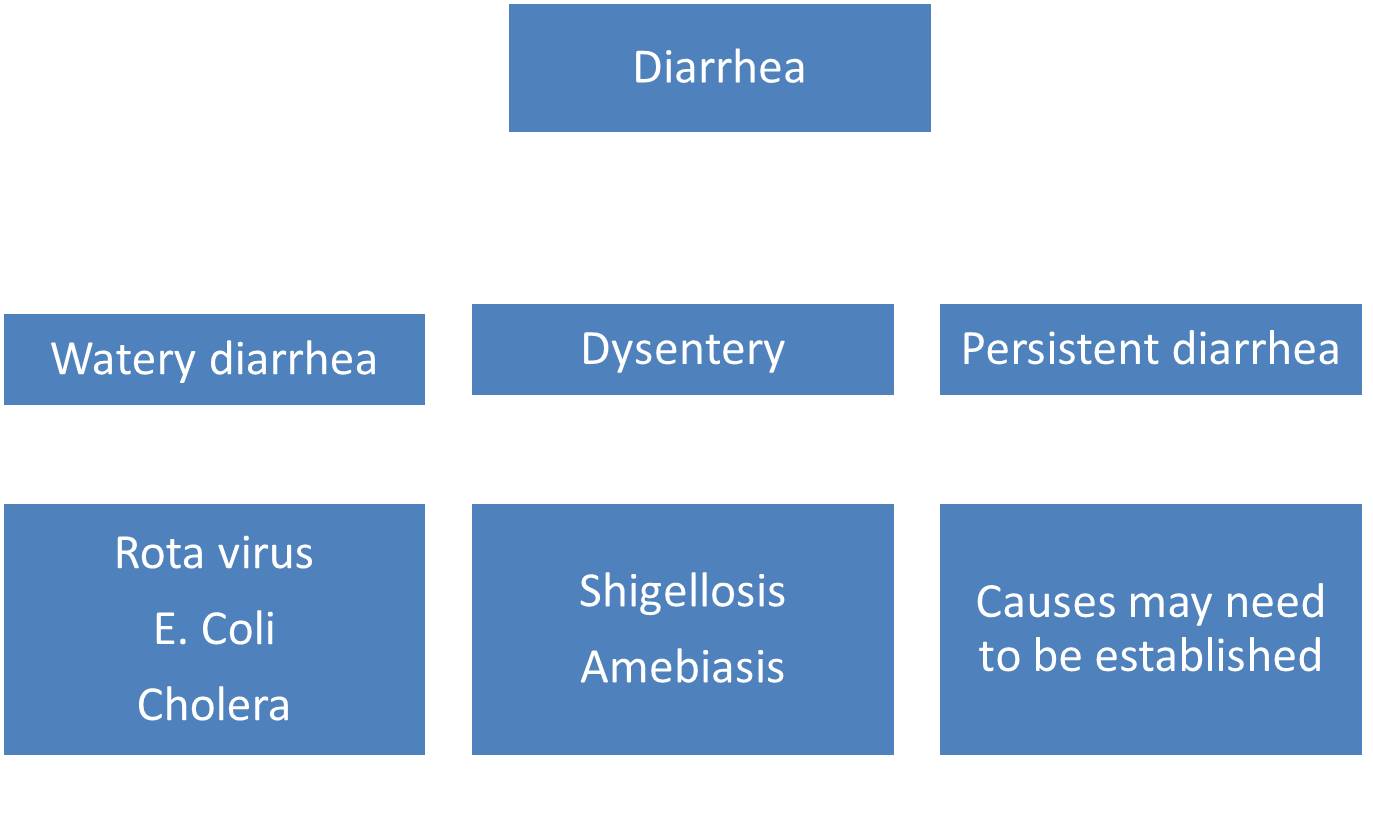
Agent, host and environmental factors
Causes of Acute diarrhea
VIRUSES
- Rotavirus
- Leading cause of severe, dehydrating diarrhea in < 5
- In developing countries, three-quarters of children acquire their first episode of rotavirus diarrhoea before the age of 12 months, whereas
- in developed countries the first episode is frequently delayed until the age of 2-5 years.
- Severe rotavirus gastroenteritis is largely limited to children aged 6-24 months.
- Re-infection known but first one only is usually severe
- Highly infectious, shed in very high concentrations, difficult to control spread
- Even with clean water supplies and good hygiene practices
- Feco-oral route, person to person & via fomites
- Adenoviruses
- Caliciviruses
- Astroviruses
- Coronaviruses
- Norwalk agents and Norwalk-like viruses
BACTERIAL CAUSES
- Campylobacter jejuni
- Enterotoxigenic Escherichia coli
- ETEC is an important cause of acute watery diarrhoea in adults and children in developing countries
- Most common cause of traveller's diarrhoea.
- Two types of toxins, heat labile (LT) and heat stable (ST).
- Shigella
- Higher percentage of mortality
- Important cause among under 5
- Salmonella
- Cause inflammation of the bowel epithelium
- Campylobacter jejuni
- Slim, highly motile, S-shaped, gramnegative rods, formerly classed as vibrios.
- One of the commonest causes of enteritis, mechanism not known
- Vibrio cholera - Does not invade gut mucosa
- Vibrio parahemolyticus
- Bacillus cereus
- Staphylococcus aureus
- Clostridium perfringens
- Enterohemorrhagic E Coli
- Aeromonas
- Yersinia enterocolitica
- Chlamydia
- Neisseria gonorrhoeae
E. coli, Shigella and Salmonella produce potent enterotoxin similar to that of vibrio cholarae
PARASITES
- Entameba histolytica
- Giardia lamblia
- It flourishes in duodenum and jejunum
- Lumen teeming with very large numbers,
- Tichuriasis
- Cryptosporidium Spp.
- Causes diarrhea in infants, immuno-deficient patients and some domestic animals
- Diarrhea usually not severe or prolonged except in immuno-deficient sates like AIDS
- In these patients it’s a common cause of persistent diarrhea and leads to wasting
- Intestinal worms
- Cyclospora
PARENTERAL INFECTION ESP. IN CHILDREN
- ENT, respiratory
- Urinary
- Malaria
- Meningitis etc.
Apart from these, during or after measles, there is a high risk of severe or fatal diarrhea
OTHER CAUSES
- Metabolic disease
- Hyperthyroidism
- Diabetes mellitus
- Pancreatic insufficiency
- Food allergy
- Lactose intolerance
- Antibiotics
- Irritable bowel syndrome
- Parenteral Diarrhea – particularly in young children
- ENT, respiratory, urinary, infections malaria, meningitis
Until recently the pathogen could be identified only 25% of diarrhea cases
Currently, new techniques have enabled such identification in 75% cases
Causes in Developing Countries
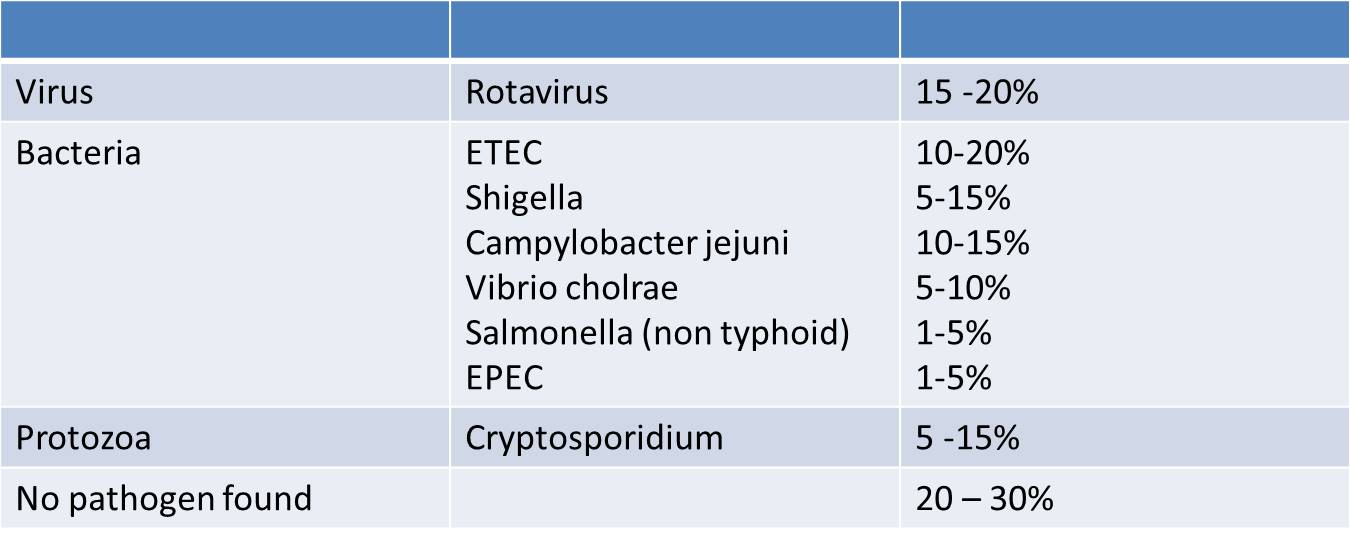
Reservoir of Infection
- Human is principal reservoir for:
- V. cholerae, Giardia lamblia and E. histolytica
- Both man and animals are the reservoir for:
- Campylobacter jejuni, salmonella spp. and Y. enterocolitica
Host Factors
- Most common in children esp. b/w 6months – 2 years age
- Highest incidence between 6 – 11 months age
- This may be due to:
- Declining maternal antibodies
- Introduction of complimentary feed
- Crawling
- More common in the
- bottle fed
- malnourished
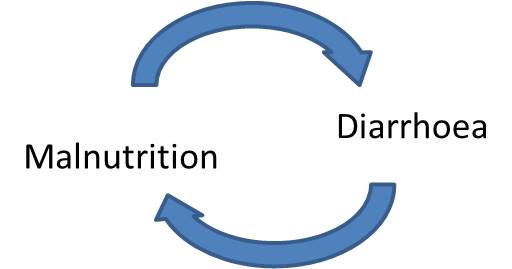
- Malnutrition leading to diarrhea and vice versa forms a vicious cycle
ENVIRONMENTAL FACTORS
risk factors are:
- Poverty
- Unhygienic conditions
- Prematurity
- Reduced gastric acid
- immunodeficiency
Seasonal patterns differ in geographical areas
- Tropical areas:
- Rotavirus occurs throughout the year but increase in winter and
- Bacterial diarrheas peak during the warmer rainy season
- Temperate climate:
- Bacterial diarrheas more frequent in warm season and
- Viral diarrheas in winters
Transmission
- Most of the diarrheal agents are transmitted by the fecal-oral route
- Water – borne
- Food – borne
- Person to person transmission via finger or fomite
- Some viruses (such as rotavirus) can be transmitted through air
- Nosocomial transmission is possible
Reference:
K. Park, 2019. Epidemiology of Communicable Diseases, In: Park’s Textbook of Preventive and Social Medicine, 25th ed. Jabalpur, 2019
Clinical features suggestive of dehydration
ORAL REHYDRATION SALT (ORS)
Management of Acute Diarrhoea in Children
4 Rules of Home Treatment for Diarrhea in Children
Sugar Salt Solution for Rehydration
6 Steps of ‘Skin Pinch’ Test for Assessing Dehydration
Some Clinical features of diarrhea due to common causative organisms
Principles of management of diarrhea
Control of diarrheal diseases
Indicators of Diarrhea Control
Lecture on acute diarrheal disaeses-1 (epidemiology): https://www.youtube.com/watch?v=8VMSn7mJgm8&t=215s
Lecture on acute diarrheal disaeses-2 (control): https://www.youtube.com/watch?v=85iOg3GNevU&t=41s
Lecture (HINDI) on acute diarrheal disaeses-1 (epidemiology): https://www.youtube.com/watch?v=c-bOaC55u-g&t=5s
Lecture (HINDI) on acute diarrheal disaeses-2 (control): https://www.youtube.com/watch?v=acc-nqkjar4&t=1s